Record the whole appointment
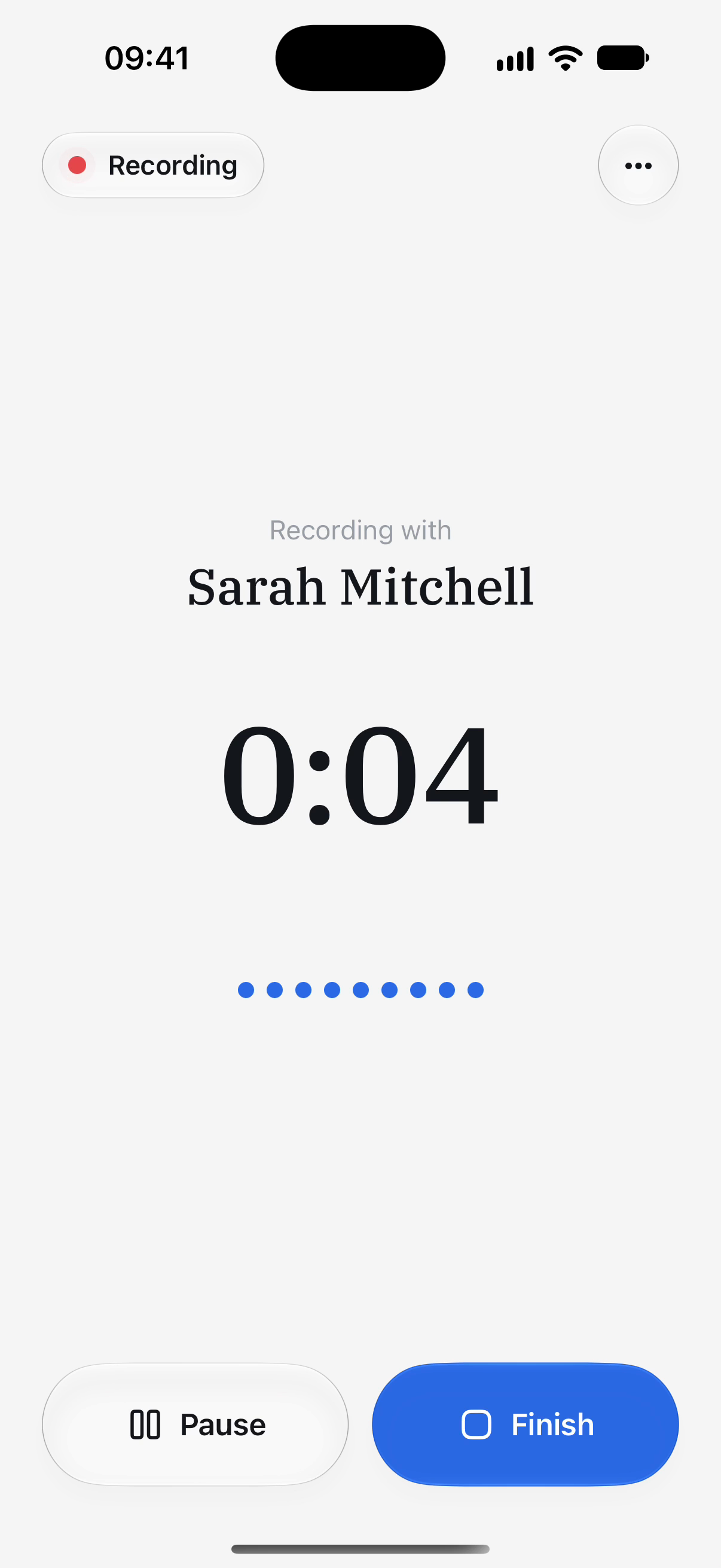
Tap Record as they sit down and talk as you always do. It keeps going with the screen locked.
Denty listens to the whole appointment, then writes the clinical note: who said what, every option you discussed, the shorthand written out in full. And a report your patient can actually read.
You talk to your patient. Denty separates every voice, sets the small talk aside, and turns the rest into a note you'd be happy to sign, about a minute after you finish.
Tap Record as they sit down and talk as you always do. It keeps going with the screen locked.
Dentist, nurse and patient, told apart. The small talk is set aside, and each line has its clinical meaning written beneath it.
Look up "pain at night" and find the pulpitis, even when the note never uses those words.
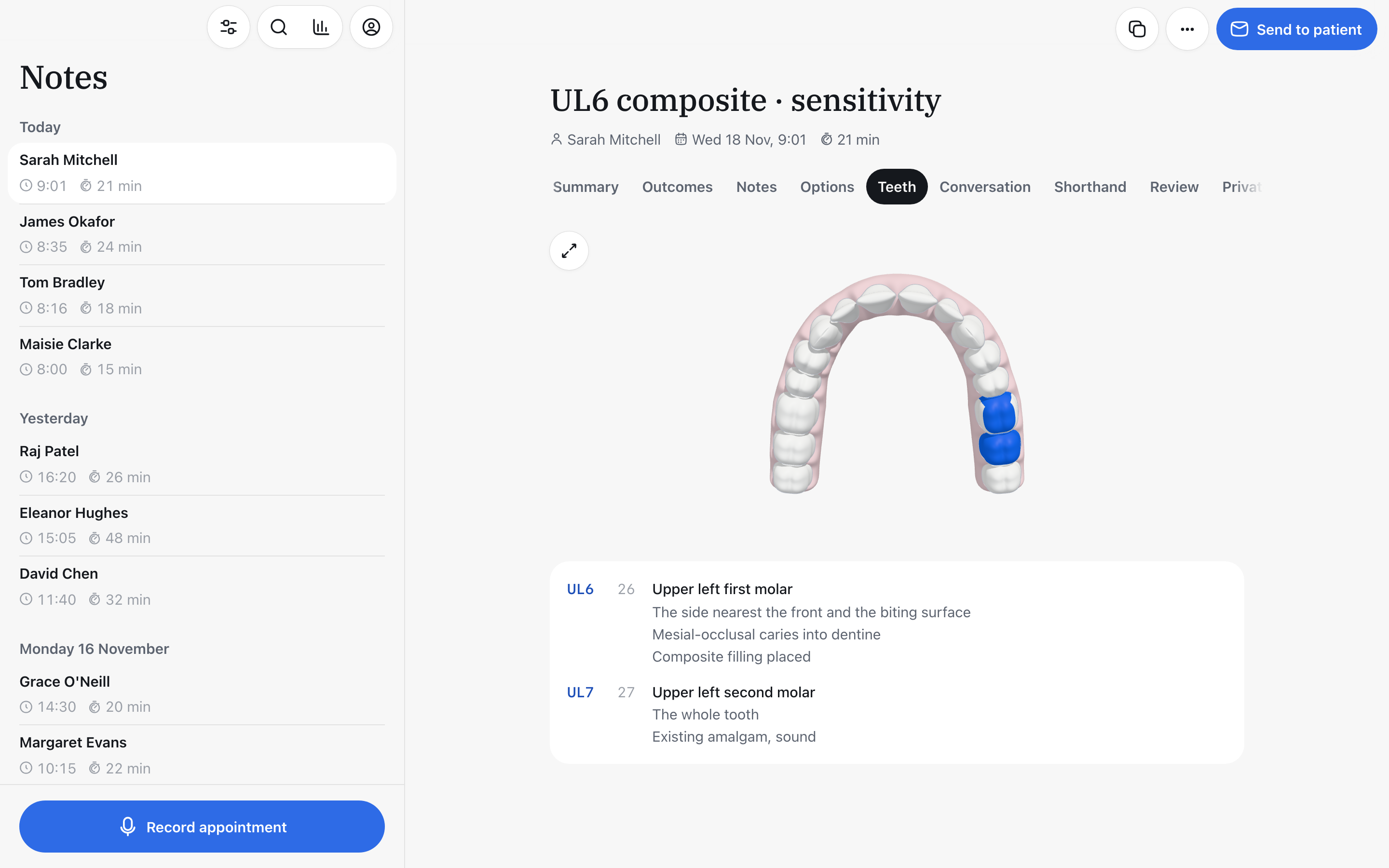
The note's findings, mapped onto each surface. Your patient sees the same teeth.
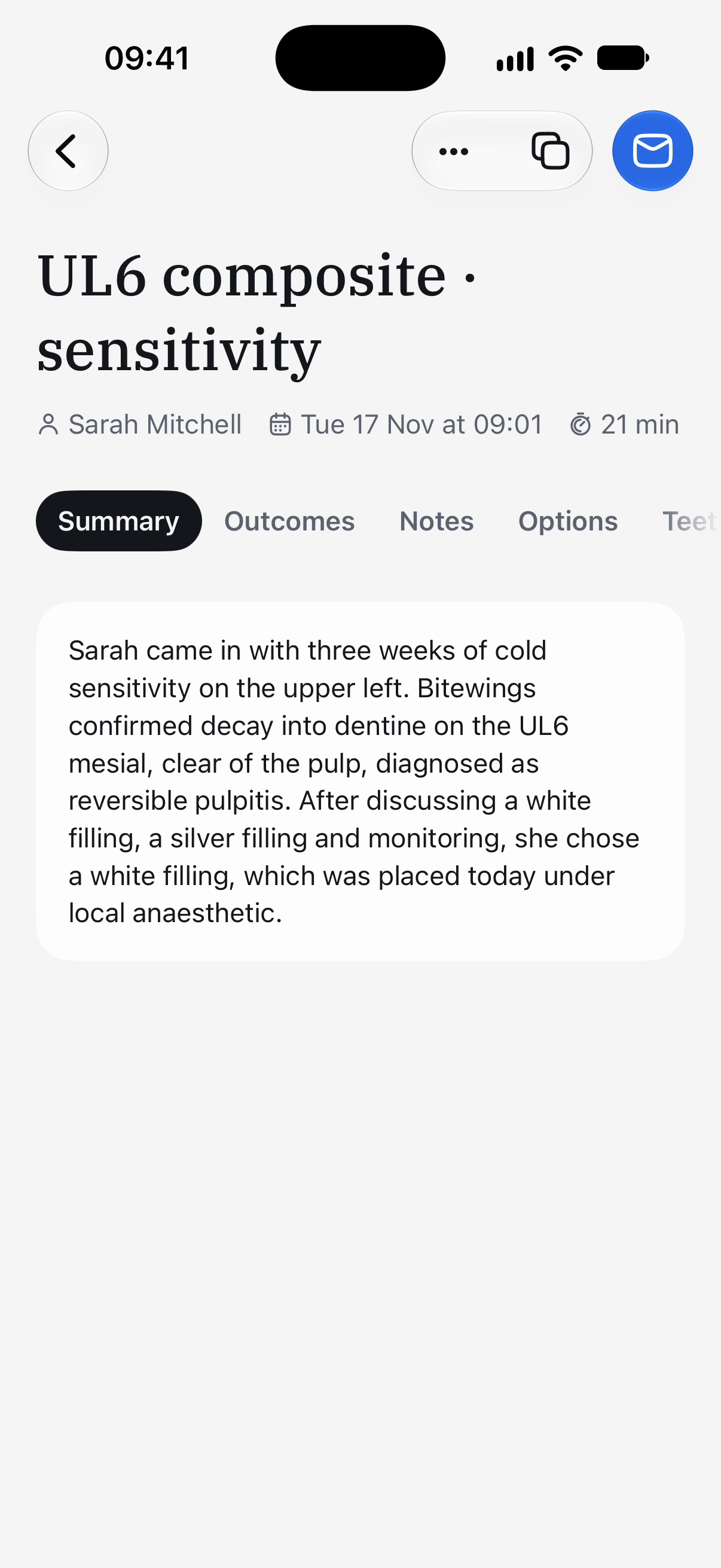
Plain English, sent by email or text: what was found, their options, and what happens next.


Find anyone by name, email, mobile or NHS number, with all of their appointments in one place.
Record on your phone in the surgery. Read, check and send from the desk. Coming soon to Android, after testing.
Denty knows dentistry: who's speaking, what the shorthand means, and which options were never on the table.
Each voice is named, and its clinical meaning written beneath.
The way you say it in the chair, turned into a sentence anyone can read.
What was chosen, what was declined, and what wasn't suitable.
Finish the appointment and carry on. Your phone tells you when the note is written.
Every appointment Denty writes up is counted, so you can see what it's saving you.
68 hours
↗ 31%Time saved writing notes
Enough for 136 piano lessons.
10 day streak
Longest 15Weekends off don't break a streak.
692
Appointments written up
163,312
Words written for you
7,612
Small talk set aside
2,768
Shorthand written out
Patient audio and notes are special-category data, and Denty treats them that way. Read the privacy policy
Recordings and notes are encrypted, in transit and at rest.
Each note can be opened only by the clinician who made it.
You tell patients you’re recording. If they’d rather not, you don’t.
Report links can’t be guessed and never name the patient.
We're opening Denty to a small group of practices first.
Thanks. We'll be in touch soon.
